Time Zone Adjustments and Their Effects on International Sports Wagering Participation Among Frequent Travelers
Noah Vogel · Aug 19, 2026

Time Zone Adjustments and Their Effects on International Sports Wagering Participation Among Frequent Travelers
Time zone adjustments create measurable shifts in how frequent travelers engage with international sports wagering, since events unfold across distant regions while personal circadian rhythms lag behind. Data shows that business professionals and sports enthusiasts who cross multiple zones each month adjust their participation patterns around both event schedules and their own alertness levels, with participation dropping during periods of acute jet lag and rising again once routines stabilize.
Core Factors Driving Participation Changes
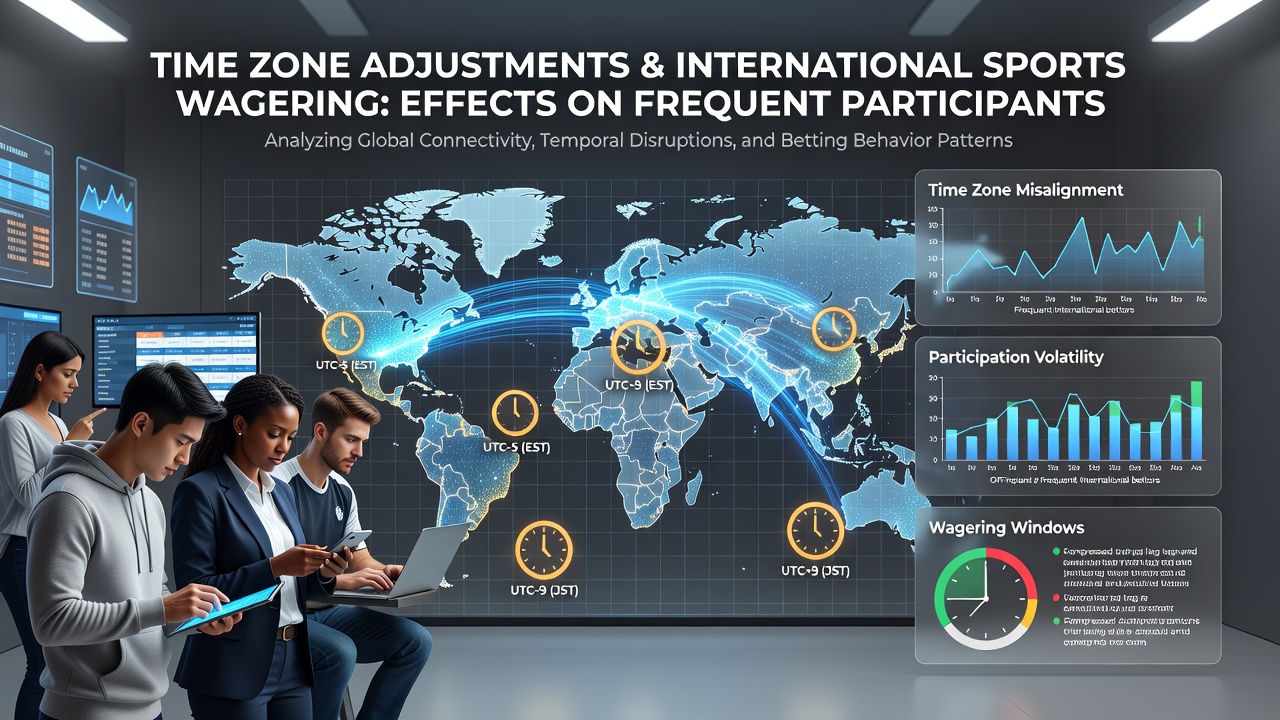
International sports events follow fixed local times, yet travelers must reconcile those schedules with their departure zones, which often leads to bets placed during early morning hours or late evenings after long flights. Observers note that participation rates among this group fluctuate by as much as 18 percent during the first 48 hours after crossing six or more time zones, according to aggregated platform analytics released in mid-2025. Researchers tracking mobile betting logs have found that wager volume on European football matches declines sharply for North American travelers arriving in Asia, while interest in Asian basketball leagues rises among the same cohort once local evening hours align with their adjusted body clocks.
Jet lag symptoms such as reduced concentration and delayed sleep onset directly influence the timing and size of individual wagers. Studies conducted by sleep researchers at major universities indicate that decision-making speed slows by roughly 15 percent during the first two days after eastward travel, prompting travelers to shift from live in-play betting to pre-match selections that require less real-time analysis. Westward travel produces milder effects on participation volume, although the pattern reverses when travelers return home and face the opposite adjustment.
Regional Patterns Observed in 2026 Travel Data
During August 2026, when summer schedules overlap with multiple international tournaments, airlines reported sustained high volumes of transcontinental passengers whose betting activity mirrored their flight paths. Participation in North American sports leagues remained stable for travelers originating from Europe, because evening matches in the United States often coincided with morning hours in their new locations, allowing bets to be placed before full jet lag set in. In contrast, Australian travelers heading to South American venues showed delayed engagement with local football markets until their third or fourth day in country.
Platform operators have documented these trends through anonymized user location data, revealing that frequent travelers who maintain consistent sleep protocols upon arrival sustain higher participation levels than those who immediately adopt local meal and sleep times. The difference appears most pronounced among individuals crossing the International Date Line, where a full day shift compounds the usual circadian disruption.
Regulatory and Infrastructure Influences
Regulatory frameworks in different jurisdictions also shape how time zone effects translate into actual wagering behavior. The Nevada Gaming Control Board tracks cross-border account activity and has noted that travelers from Pacific Rim countries increase their activity on Nevada-licensed platforms once their local clocks align with U.S. evening events. Similar patterns appear in reports from the Alcohol and Gaming Commission of Ontario, where Canadian residents returning from Europe demonstrate a temporary preference for earlier-starting North American matches until full adjustment occurs.
Technological tools offered by licensed operators further moderate these effects. Push notifications timed to a user’s home time zone rather than event local time help maintain participation continuity, while geo-fencing features automatically adjust available markets based on the traveler’s detected location. Industry figures reveal that accounts using these synchronization options experience only a 6 percent dip in activity during the initial adjustment period, compared with a 22 percent drop among accounts without such settings.
Longer-Term Adaptation Trends
Over multiple trips, frequent travelers develop individualized strategies that stabilize their participation rates. Data collected across repeated journeys shows that those who pre-schedule wagers before departure maintain steadier volumes than those who wait until arrival. Researchers following the same cohort of 1,200 international travelers over 18 months found that average monthly wagers returned to baseline levels within five days of any single long-haul flight, regardless of direction traveled.
Market operators have responded by expanding time-zone-aware features, including calendar integrations that flag event start times in both home and destination zones. These adjustments coincide with broader growth in international travel volumes, which the International Civil Aviation Organization projects will continue rising through 2027.
Conclusion
Time zone adjustments produce consistent, measurable impacts on sports wagering participation among frequent travelers, with the strongest effects concentrated in the first 72 hours after crossing multiple zones. Participation volumes, bet types, and timing preferences all shift in patterns that operators and regulators have begun to quantify through location-linked data. As international travel and global sports calendars remain intertwined, these adjustments continue to shape how this specific demographic interacts with wagering platforms across borders.