Seasonal Adjustments in Resource Allocation for Multi-Venue Card Tournament Circuits
Noah Vogel · Nov 14, 2026
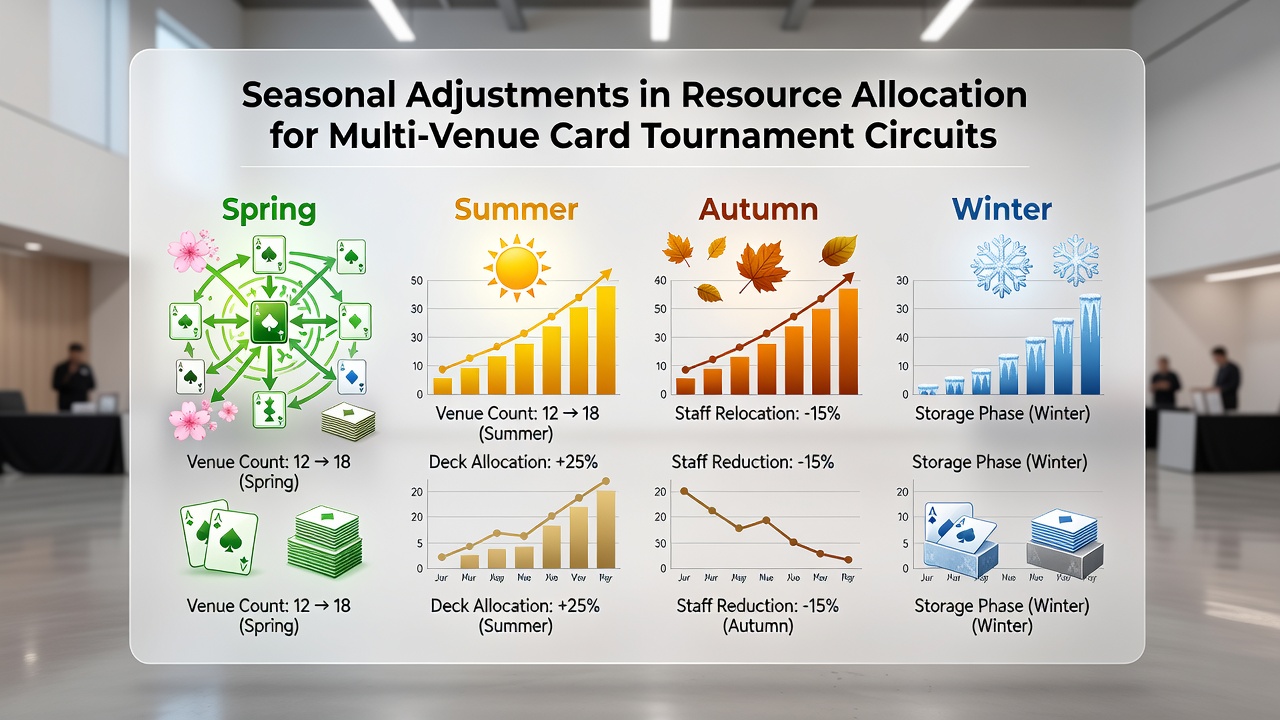
Seasonal Adjustments in Resource Allocation for Multi-Venue Card Tournament Circuits
Multi-venue card tournament circuits coordinate staff, equipment, and marketing budgets across cities that experience distinct seasonal patterns in attendance, and these patterns drive changes in how resources get distributed throughout the year. Organizers track player registration data from previous cycles to predict demand at each stop, which allows them to scale the number of tables, dealers, and security personnel accordingly. Circuits that operate in both North American and Asian markets, for example, often shift dealer training schedules and equipment shipments to align with peak registration periods that occur during cooler months in one hemisphere and warmer months in another.
Key Seasonal Drivers in Tournament Planning
Weather conditions, holiday calendars, and overlapping sports schedules influence how many participants register at each venue, and circuit operators respond by adjusting table counts and prize pool guarantees well in advance. Data from past seasons shows higher turnout during winter months in temperate climates when indoor events attract more local players, whereas summer stops in resort destinations draw larger international fields because travel becomes easier. Resource teams therefore increase marketing allocations for digital campaigns targeting those regions during off-peak registration windows, while reducing on-site staffing at venues where historical numbers remain lower.
November 2026 sits at the intersection of several major circuits moving between late-fall North American stops and early-winter Asian festivals, and planners already use registration trends from the previous two years to finalize dealer contracts and chip inventory shipments. Those adjustments include reallocating experienced floor staff from events that conclude earlier in the season to newer venues that require additional oversight during the first few days of play. Supply chain managers coordinate with equipment providers to ensure felt, cards, and shuffling machines arrive on staggered timelines that match the sequence of tournament starts rather than shipping everything at once.
Allocation Models Used Across Circuits
Circuit operators employ tiered allocation frameworks that classify venues according to expected field size, and these frameworks trigger different staffing ratios and marketing spend levels. Venues projected to draw fewer than 400 players receive a base package of tables and dealers, while those forecast above 800 players trigger additional security contracts and expanded media areas. The models incorporate real-time registration data that updates every 48 hours during the final month before an event, allowing last-minute increases in table inventory when early bird entries exceed projections.
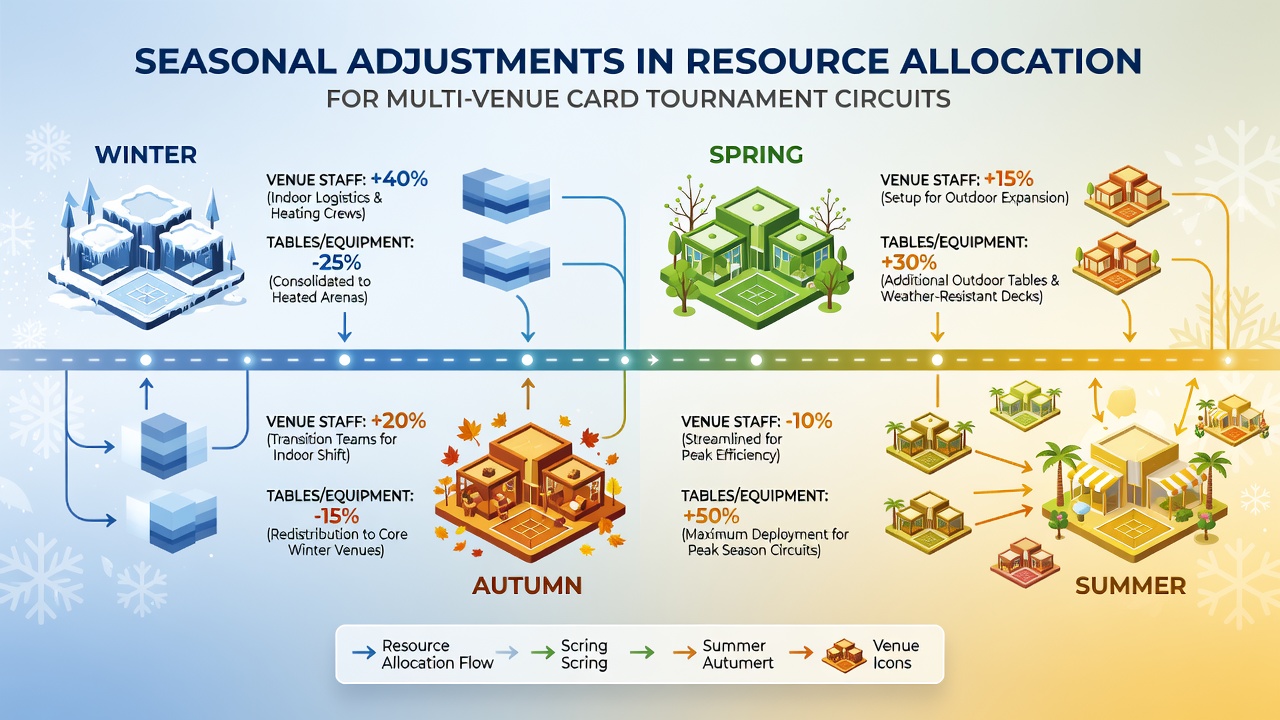
Financial controllers track these variables through centralized dashboards that compare current season figures against multi-year averages, and they release incremental budget releases only after registration thresholds are met. This approach prevents over-allocation of funds to marketing in regions where player interest has cooled, while preserving flexibility to boost prize pools at stops that show sudden growth. Research from gaming analytics firms indicates that circuits using such threshold-based releases reduce unused table rental costs by measurable percentages compared with fixed-allocation systems.
Coordination Between Venues and Suppliers
Logistics teams maintain rolling schedules that move physical assets between venues on tight timelines, and seasonal weather disruptions sometimes force rerouting of shipments through alternate ports or airports. When one venue finishes its final day of play, equipment crews begin breakdown procedures within hours so that high-demand items reach the next location before player check-in begins. Dealer pools also rotate on seasonal contracts, with core staff traveling between stops while local hires fill gaps during high-volume periods in popular tourist destinations.
Industry reports from the Canadian Gaming Association highlight how circuits serving both Canadian and U.S. markets adjust dealer certification timelines to accommodate different provincial licensing windows that open at varying points in the calendar year. Similar coordination occurs with Australian operators who align their summer festival schedules with northern hemisphere winter events to share certain high-profile players and media partners.
Technology and Data Integration
Registration platforms feed live data into allocation software that recalculates required resources each week, and these systems flag when projected player counts approach the capacity limits of booked venues. Organizers then decide whether to add overflow rooms or cap entries, choices that directly affect staffing and equipment needs. Venues with integrated hotel partnerships receive priority for extra space during peak seasons because those arrangements reduce transportation logistics for both players and staff.
Conclusion
Seasonal adjustments in resource allocation for multi-venue card tournament circuits rely on historical registration patterns, real-time data feeds, and staggered logistics plans that move tables, dealers, and marketing dollars to where demand is highest. Circuits operating across multiple continents refine these processes each year by comparing outcomes against forecasts, which produces more precise staffing ratios and equipment schedules. As November 2026 approaches, planners continue to apply these models to upcoming stops, ensuring that table counts, dealer availability, and promotional budgets align with expected participation levels at each venue.