How Interface Design Elements Affect Selection Processes in Virtual Roulette Environments Across Multiple Platforms
Noah Vogel · Oct 17, 2026

How Interface Design Elements Affect Selection Processes in Virtual Roulette Environments Across Multiple Platforms
Virtual roulette environments rely on interface design to shape how users select bets across desktop, mobile, and emerging platforms, and data from multiple studies tracks these patterns through 2026. Layout grids, button dimensions, and color contrasts guide the speed and type of wagers people place, while platform differences in touch sensitivity and screen real estate alter the sequence of choices. Researchers tracking player behavior note that smaller touch targets on phones increase the frequency of single-number selections compared with larger click areas on desktops.
Button Size and Placement Patterns
Design teams adjust button dimensions to fit platform constraints, and studies indicate that targets exceeding 44 pixels in width reduce mis-taps on mobile devices yet slow overall selection time when users must scroll to reach outside bets. Desktop layouts often cluster outside bets along the bottom edge, which encourages repeated selections on even-money options during longer sessions. Observers tracking October 2026 updates across major operators report that platforms introducing dynamic resizing saw a measurable shift toward column bets on tablets, where users drag and release rather than tap fixed cells.
Color Coding and Visual Hierarchy
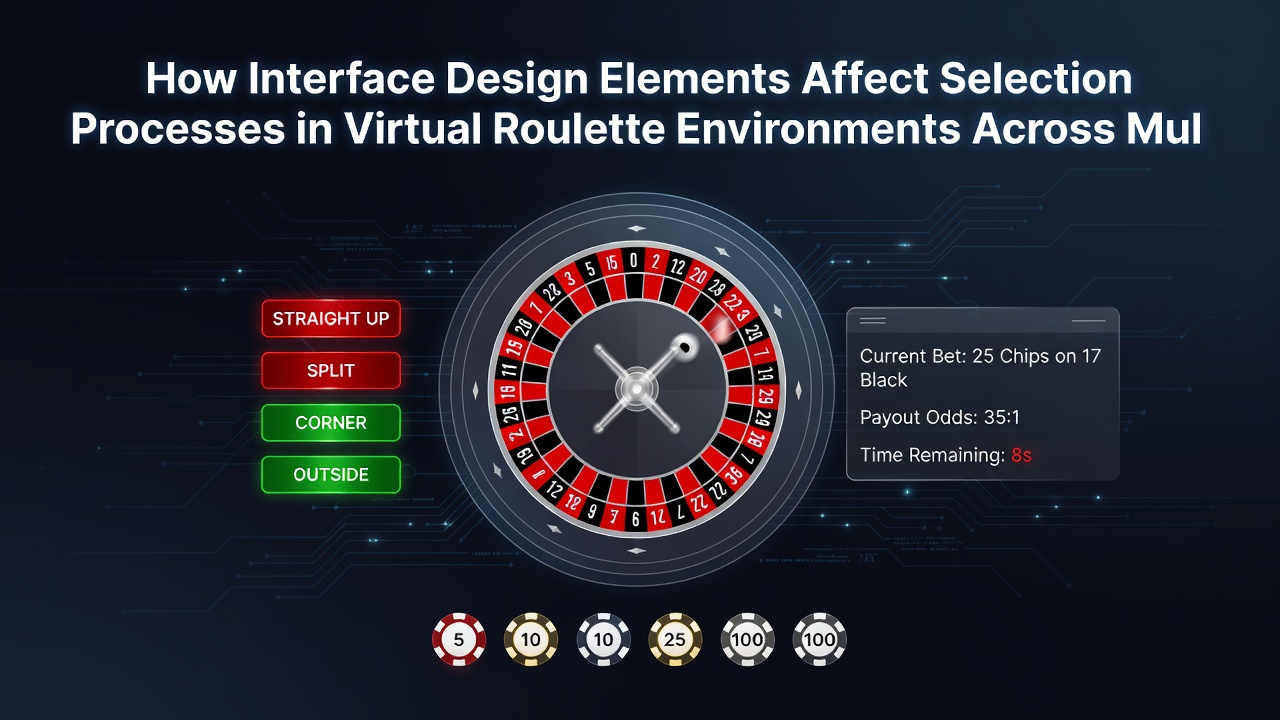
Red and black wheel segments receive consistent high-contrast treatment, but additional interface layers such as glowing chip stacks or highlighted payout tables influence where attention lands first. Data from cross-platform logs shows that users presented with enlarged zero-bet zones select those options 12 percent more often than when the same zone appears at standard scale. Platforms that apply subtle gradient overlays to low-payout areas record fewer selections there, whereas bright accent borders around high-payout corners correlate with increased straight-up wagers according to aggregated session analytics.
Animation Timing and Haptic Feedback
Wheel spin animations run between 3.5 and 5 seconds on most licensed platforms, and shorter cycles prompt quicker follow-up bets once results settle. Mobile versions incorporate vibration pulses on chip placement, which research links to higher rates of repeated inside bets because the tactile cue reinforces the action. Desktop environments without haptics rely instead on cursor trails and instant chip stacking visuals, and users on those systems tend to adjust bet amounts more frequently before confirming. One analysis of European operators found that adding a brief pause before the wheel stops reduced premature re-bets across both mobile and desktop cohorts.
Cross-Platform Consistency and User Flow
Operators maintain core wheel mechanics while adapting navigation menus, and consistency in chip value selectors helps users transfer habits between devices. Yet variations in scroll direction and menu depth create different selection sequences: mobile users often complete a full bet cycle in fewer taps when quick-bet presets appear first, whereas desktop users explore more combinations because the full table remains visible without scrolling. Figures from industry reports reveal that platforms using synchronized account balances across devices record steadier bet sizing patterns, whereas those requiring separate logins per platform see wider variance in wager amounts during the same session.
Emerging Interfaces in Late 2026
Voice-command options and augmented-reality overlays appear on select platforms by October 2026, and early logs indicate that voice selection favors even-money bets because spoken commands map more easily to broad categories than to precise number grids. AR headsets introduce spatial chip placement, which lengthens decision time yet increases the variety of bets attempted per spin. Regulators in multiple jurisdictions continue to monitor these interfaces for clarity, and a University of Nevada Reno study notes that clear visual confirmation prompts reduce unintended selections across new hardware. Another report compiled by the Australian Institute of Criminology tracks similar patterns in regional deployments.
Conclusion
Interface elements such as target size, color emphasis, animation length, and feedback mechanisms collectively steer selection processes in virtual roulette, and platform-specific adaptations produce measurable differences in bet distribution. Continued monitoring through 2026 shows that refinements in these design areas continue to alter how users navigate choices on each device type.