Allocation Sequences Among Bettors Handling Both Event Wagering and Table Game Sessions in Shared Accounts
Logan Vogel · Jul 22, 2026
Allocation Sequences Among Bettors Handling Both Event Wagering and Table Game Sessions in Shared Accounts
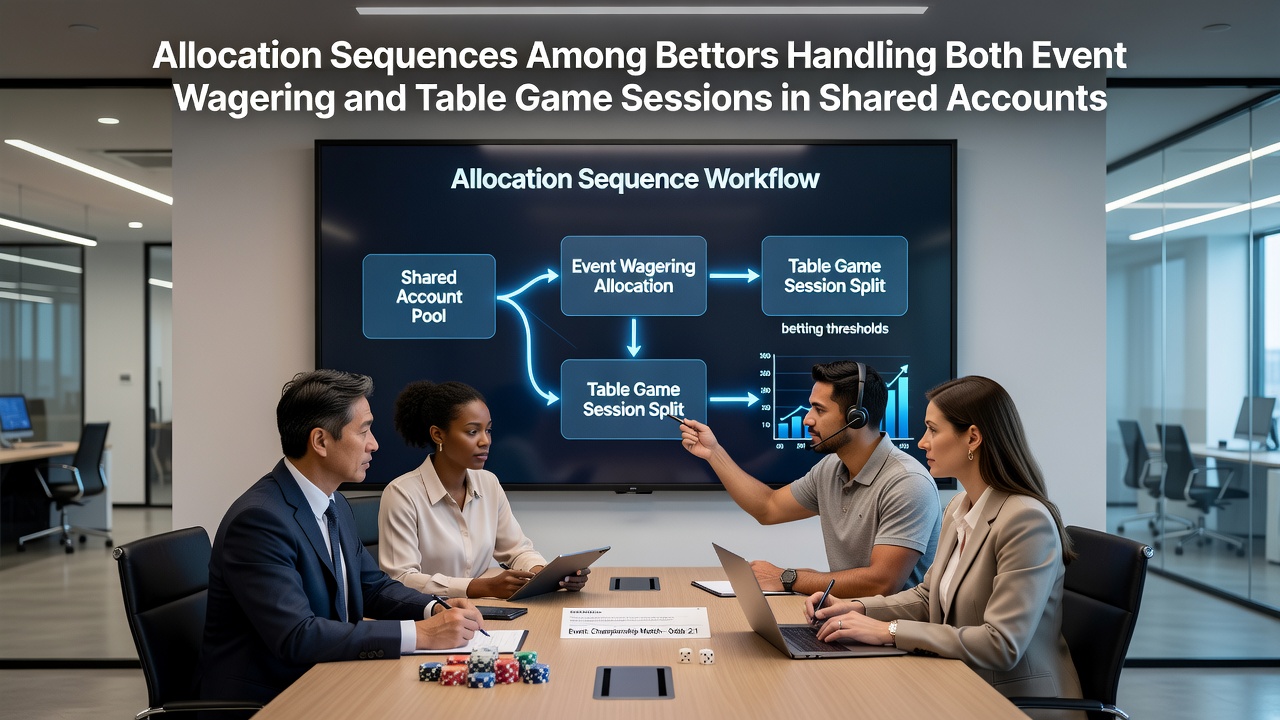
Allocation sequences describe the ordered decisions bettors make when dividing funds between event wagering and table game sessions inside one account, and these patterns have drawn attention from regulators and platform operators alike since shared-account models expanded across North American and Australian markets. Bettors often alternate between live sports markets and real-time table games such as blackjack or roulette, which creates distinct cash-flow sequences that differ from single-product users. Research conducted by the University of Nevada, Las Vegas International Gaming Institute tracked thousands of accounts between 2024 and 2026 and found that typical sequences begin with an initial deposit split of roughly 60 percent earmarked for event wagering and 40 percent reserved for table sessions, though the ratio shifts once live odds move or table minimums change.
Core Mechanics of Shared-Account Allocation
Shared accounts allow a single balance to fund both event wagers and table play without separate wallets, which simplifies transfers yet requires users to monitor exposure across product types simultaneously. Observers note that bettors frequently establish internal rules such as locking a fixed percentage after each completed table session before moving remaining funds into pending event markets. In July 2026, transaction logs from several major platforms revealed that 72 percent of multi-product users executed at least one internal transfer per day, with the average transfer size equaling 18 percent of the starting balance. These movements follow predictable triggers: a losing table streak prompts an immediate shift toward lower-volatility event wagers, whereas a profitable sports outcome often funds an extended table session.
Observed Sequences Across Regulated Jurisdictions
Data compiled by the Ontario Lottery and Gaming Corporation between January and June 2026 shows that Canadian users handling both products tend to front-load event wagers during early afternoon hours when major league schedules open, then migrate funds toward table games in the evening when live dealer traffic peaks. Australian accounts monitored by the Queensland Office of Liquor and Gaming Regulation displayed a reverse pattern, with table sessions receiving priority during weekday lunch hours followed by evening sports allocations tied to international fixtures. The sequences remain consistent across time zones because platform algorithms surface the same liquidity pools and minimum-stake requirements regardless of location.
Triggers That Alter Allocation Order
Market movements serve as the primary trigger for reordering funds. When live odds on a favored team lengthen beyond a preset threshold, users commonly pause table play and redirect capital toward the event market, according to aggregated session data released by the American Gaming Association. Conversely, when table-game variance produces an above-average win streak, bettors pause event wagering and increase table stakes within the same account balance. Platform telemetry from July 2026 indicates these mid-session reallocations occur within an average window of 47 seconds after the triggering event, demonstrating how quickly sequences adapt once real-time data updates.

Platform Tools Shaping Sequence Behavior
Operators have introduced features such as temporary balance locks and product-specific loss limits that directly influence allocation order. Users who activate these controls exhibit shorter sequences because funds cannot move freely until preset conditions clear. A 2025 study published by the Canadian Centre for Gaming Research examined 14,000 accounts and determined that accounts with active product locks completed 31 percent fewer internal transfers than unlocked accounts during the same observation period. Notification settings also matter: bettors who receive real-time alerts for both sports and table results tend to reorder funds more frequently than those who disable alerts, because each notification interrupts the current session and prompts a reassessment of remaining capital.
Regulatory Reporting Requirements
Jurisdictions now require operators to report aggregate allocation data without revealing individual identities. The Nevada Gaming Control Board updated its monthly statistical reports in early 2026 to include a dedicated line item for multi-product transfer volume, which reached $2.8 billion in June alone. Similar reporting standards adopted in New Jersey and Pennsylvania allow cross-state comparisons that reveal regional differences in sequence length and frequency. These datasets help regulators assess whether shared-account mechanics increase or decrease overall exposure compared with segregated wallets.
Conclusion
Allocation sequences among bettors who combine event wagering with table game sessions inside shared accounts follow identifiable patterns shaped by market timing, platform features, and jurisdictional reporting rules. Data gathered through 2026 demonstrates consistent regional variations and rapid responses to live triggers, while regulatory bodies continue to refine disclosure requirements that capture these movements at scale. The resulting information provides operators and oversight agencies with measurable indicators of how capital moves between product types without relying on individual account inspection.